
Hydraulic ironworker evolution history
The hydraulic ironworker was originally invented in 1949, but it never really entered the scene until 50 years ago when the patent was acquired and manufacturing of these metal fabricating machines in the U.S. began. Many of the earliest models are still operational on shop floors and in maintenance departments today.
For example, the first model produced by Scotchman was the 314, and we continue to get calls for replacement parts for that model. The original design was a hydraulic system, but it was powered only in one direction. It had a spring return. When the punch was engaged, the ram went down, and the spring pulled it back up. That coil spring was similar to one found in a ’57 Chevy at the time.
Fifty years later, we continue to sell dozens of those springs per month. So we buy the spring, compress it, and weld a frame around it for delivery to the customer. When the fabricator gets it, he drops it into the ironworker and cuts the frame to expose the compressed spring. That old hydraulic ironworker is ready for more work.
That’s no surprise. It’s a testament to how those ironworkers were made.
Mechanical ironworkers also were made to be long-lived. Unfortunately, they were very large, and while they still were somewhat functional, they ultimately found their way to the scrap heap to make way for more modern equipment.
Older hydraulic equipment didn’t stand out as much because it was smaller than the mechanical counterparts in many instances, yet it was able to deliver similar, if not more, force. As a result, these tools remained in use and avoided a second life as a boat anchor.
Hydraulic ironworkers may still look similar to those early models made a half-century ago, but they have evolved in several ways. It’s one of the reasons that companies keep placing orders for them and finding new ways to put them to use in manufacturing and maintenance settings.
Safety First and Always
In the late 1960s, when hydraulic ironworkers appeared on the scene, much larger mechanical models dominated the shop floor. Those mechanical ironworkers had huge flywheels that, when triggered, brought down the ram in a powerful and dramatic way. However, once it was triggered, nothing was going to stop it. It was going to come down and then go back up.
Those early hydraulic ironworkers could deliver similar force, but didn’t require all of the weight that the mechanical ironworkers did. However, you still had to respect the tonnage and power of the machine, even if it were smaller.
Modern hydraulic ironworkers have complete control of the entire stroke—both up and down. An emergency stop results in a halting of the fabricating or shearing action—unlike those older mechanical ironworkers, for which it was all about tripping the flywheel and staying out of the way.
A lot of this has to do with electric controls that govern the stroke. These controls have quicker cycle times and greater authority over the stroke than mechanical linkage stroke controls. Electric stroke controls use switches that send signals to the control valve almost instantly.
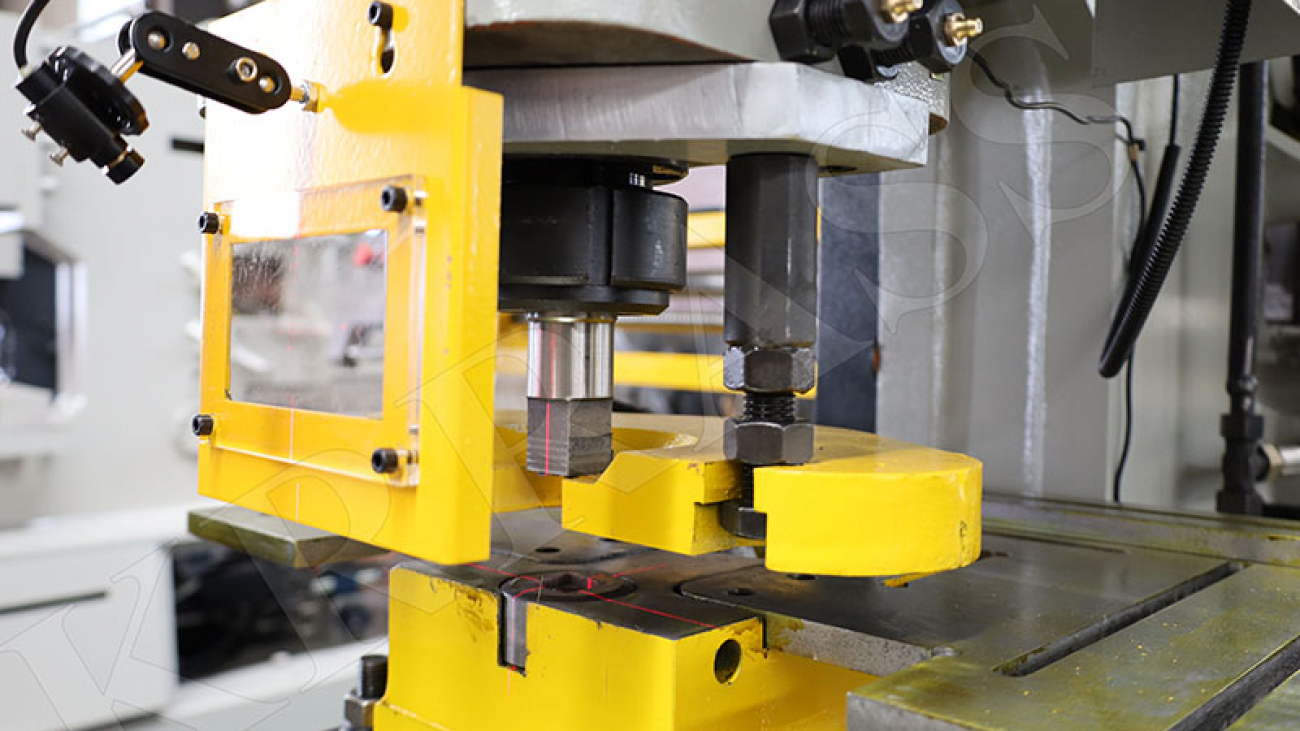
Also, the guarding standards for today’s ironworkers make it very difficult for an operator to expose his or her extremities at a pinch point of a properly designed ironworker. ANSI B11.5 standards provide the guidelines for guarding on an ironworker: It should be designed to allow material access to the machine, but prevent any part of the body from getting between the material being punched, sheared, or notched and the stripping mechanism.
Many More Options
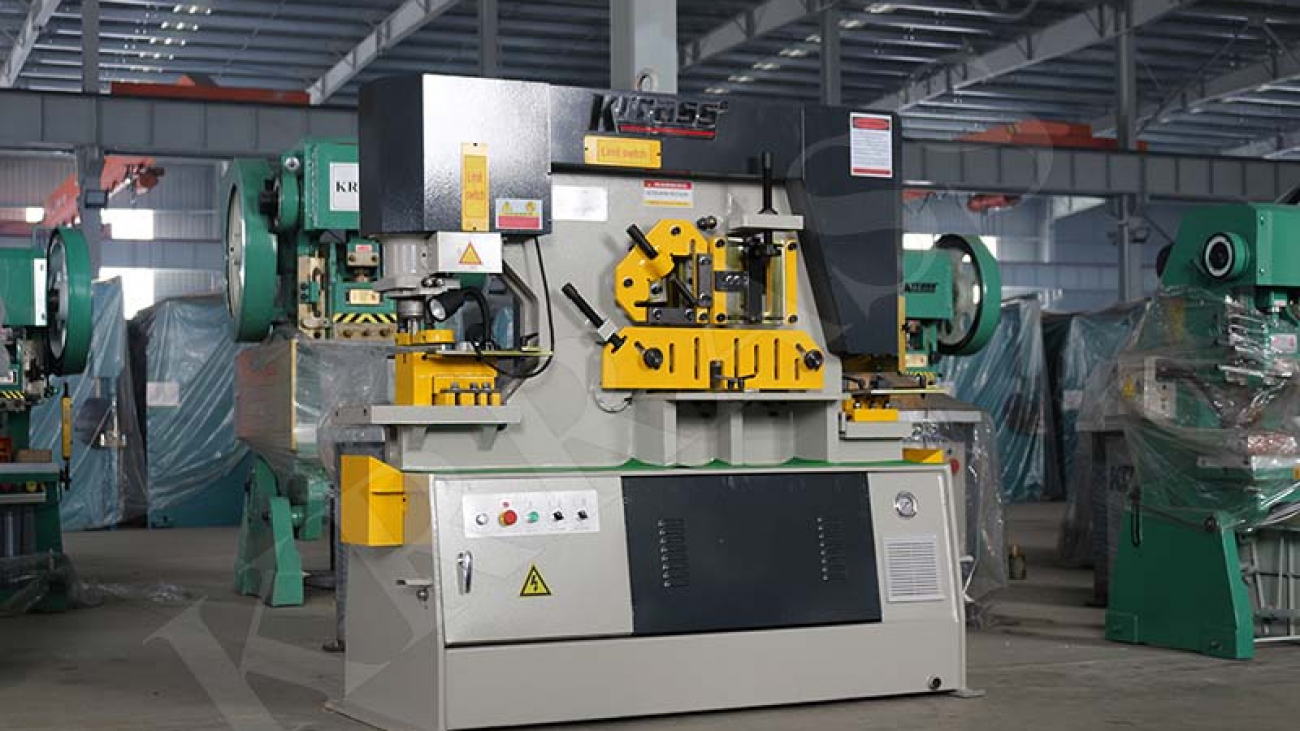
Those first hydraulic ironworkers are just like the ironworkers of today: multifunctional machines (see Figure 3). In fact, the first models had a 35-ton punch, 3-in. angle shear, and a 7-in. flat bar shear. Those same punching and shearing functions, albeit in greater tonnages now, are still pretty much available on any ironworker made in the world today.
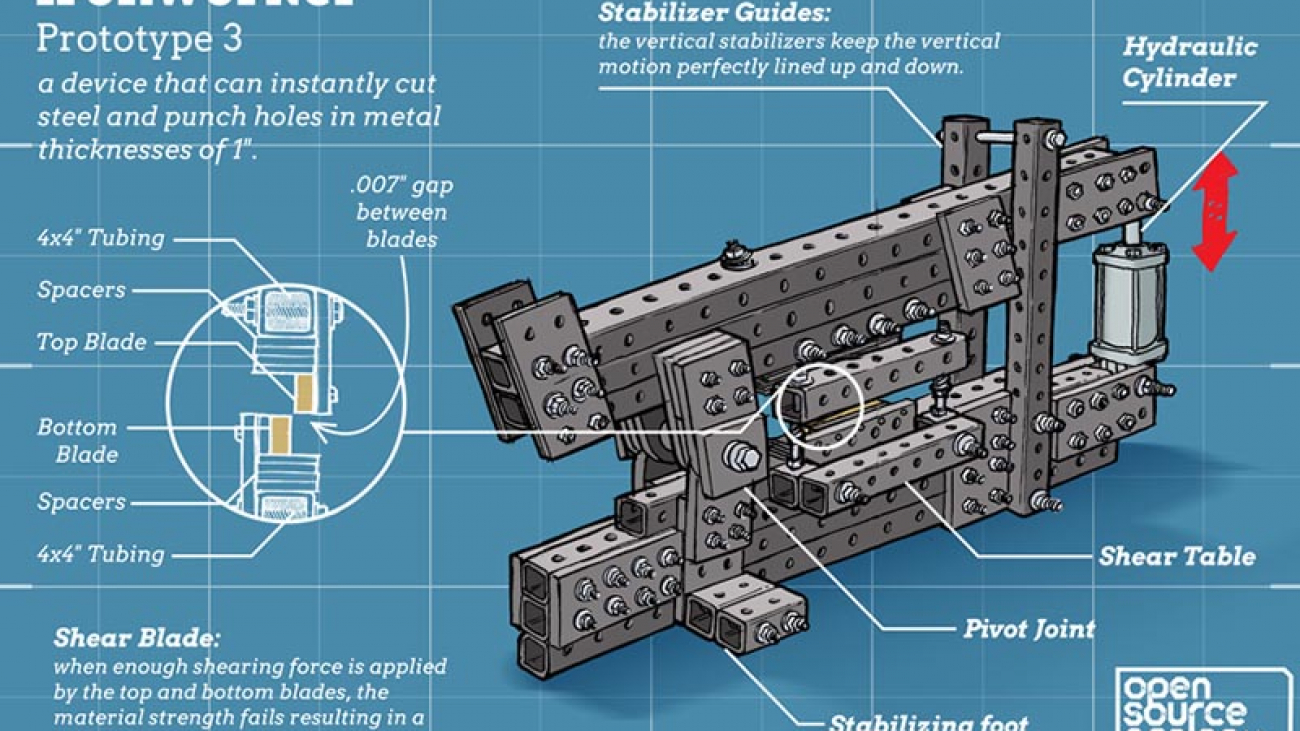
Those higher tonnages do make a big difference. It’s not unusual to see a 150-ton ironworker punching a hole in 1.25-in. steel plate. High-powered ironworkers also can shear 1-in. plate like it was butter.
Early on, these multifunctional devices demonstrated increased flexibility with the introduction of component systems that could be added to the original equipment. For instance, a basic ironworker could have had a simple channel shear station, but that later could have been switched out for another function such as press brake bending, tube shearing, or pipe notching. These types of components are designed to be quickly changed over to keep up with the high-mix work load often found in job shops and maintenance departments.
Following a European trend, hydraulic ironworkers emerged that had these additional functions fully integrated. Fabricators didn’t have to worry about switching out components. They could have the punch, flat bar shear, rod shear, rectangle notcher, and angle shear all built into one machine. Depending on the ironworker model, a fabricator also could see one of the functions replaced with a redundant function, such as another punch, or with something different, such as a press brake or pipe notcher.
Fabricators, of course, have always been interested in cost savings, so that led to the creation of dual-operator models. Originally, the ironworkers’ hydraulic system supplied power to only one function at a time. Down the line, manufacturers engineered the hydraulic systems to allow for two functions to operate at the same time, allowing a fabricator to purchase one machine, instead of two, and double productivity compared to a one-function-at-a-time ironworker.
Over the past several years, fabricators also have seen the addition of programmable stop systems applied to ironworkers (see Figure 4). More commonly used on saws, these belt-driven, computer-controlled systems move material to specific lengths in between fabricating activities on the ironworker. For example, such a system can be programmed to punch 10 holes in a 10-ft. part, and once the locations are programmed into the controller, the machine completes the job without operator interference. This eliminates the need for the operator to mark the individual holes and move the part himself in between punches, making for a more efficient punching process.
This sort of automation really stands out when the hole locations do not follow a distinct pattern. With variation comes an increased chance of rework if a human is involved. Computer-controlled punching jobs boost the quality level of these types of parts.
The Ironworker’s Future
What does the future hold for this venerable piece of equipment? The hydraulic-powered ironworker’s versatility has enabled it to remain a viable tool even as manufacturing in the U.S. has moved from high-volume production to more high-mix, low-volume scenarios. If ironworkers can remain relevant after that type of shift, that bodes well for the tool’s future.
All you have to do is look at where ironworkers are used. They remain the only fabricating machine tool that can be found in the third story of New York’s Metropolitan Opera House, where they build set pieces, and also in the maintenance shops of the world’s largest automotive manufacturers. They have evolved to meet the fabricating needs of modern manufacturers, no matter where they might be or what they might do, and that likely will be the story 50 years from now as well.